• From Road Trips to Recovery: A Fight Against Cancer

    As expected, my last article regarding cults and religions drew its share of both standing ovations and pitchforks—some readers found it clarifying, others found it personally offensive, and a few found it both at the same time. This one will likely land the same way or at least rattle something loose in how you think about belief.

    You see, it was just three years ago. Before our golden 50th anniversary. My wife and I decided to explore some iconic sites in America that had eluded us over the years. Despite purchasing 13 different homes all over the country, living on both coasts, a life filled with extensive travel during my business career—journeys overseas, and countless trips where we took the family to Hawaii and Disney World—some areas of the Southwest had remained uncharted territory for us. After reminiscing about our most cherished childhood vacations, classic road trips, we decided to recreate that magic. Thus, we packed up our trusty Cadillac and embarked on a two-week adventure.

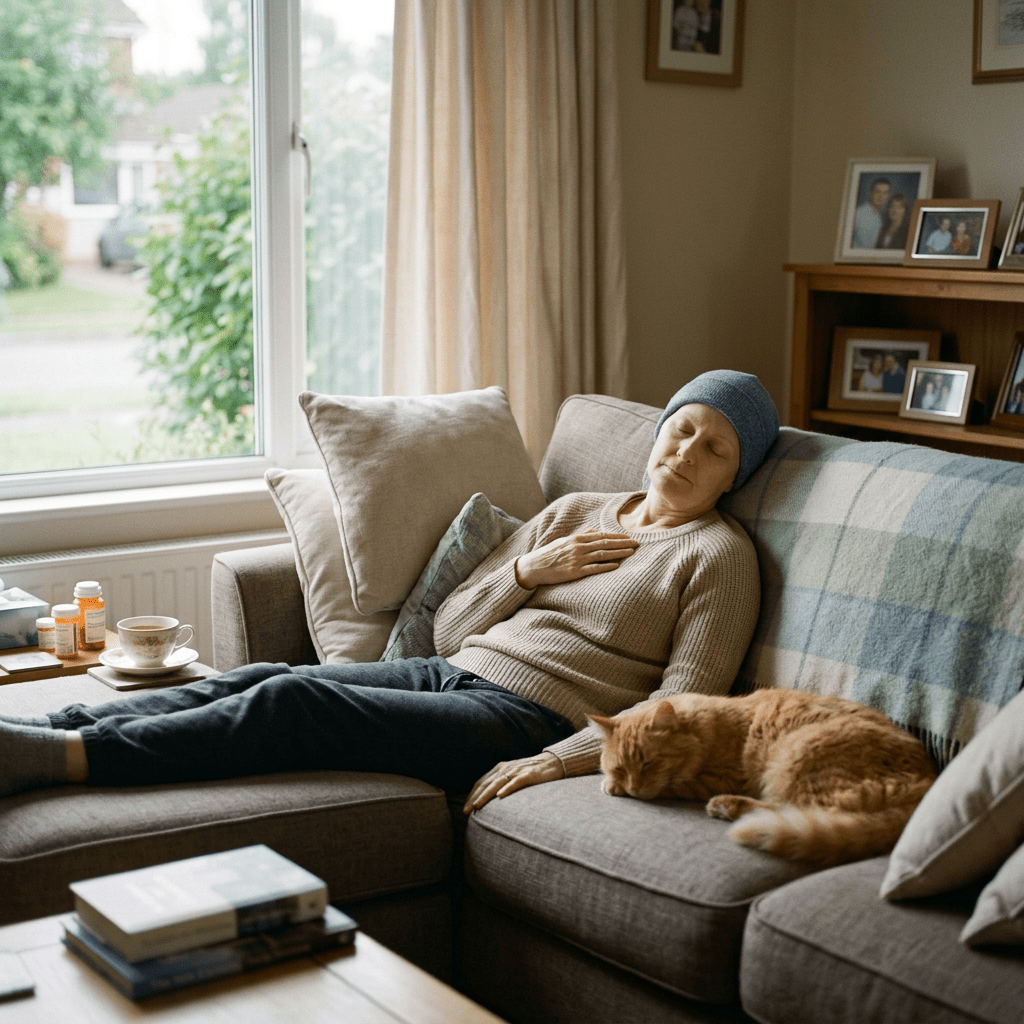
    The trip was unforgettable; from the breathtaking vistas of the Grand Canyon, the mysterious allure of Roswell, the vibrant charm of the San Antonio Riverwalk, to the rhythmic soul of Elvis’s hometown of Memphis, we endeavored to experience it all. However, during our journey, my wife Debbie occasionally felt unwell. Upon returning home, her health concerns persisted, leading to several trips to the emergency room as her heart rate and blood pressure surged unpredictably. Every time, the medical staff sent us home with a handful of pills and scheduled follow-up appointments. After enduring this routine for a few weeks, we decided to reclaim some sense of normalcy by visiting our favorite local casino.

    Once there, Debbie was suddenly overcome with chills and a deep sense of malaise. Alarmed, we quickly packed up and rushed back to the emergency room. Fortunately, we “finally” encountered an astute and determined ER doctor who vowed to uncover the root of Debbie’s health issues, no matter what it took. After a series of comprehensive scans and tests, he returned to Debbie’s room, his face ashen and his demeanor grave. Struggling with the weight of his message, he delivered the devastating news: my wife had multiple cancerous tumors scattered throughout her abdomen. That marked the beginning of an entirely new journey for both of us.

    For the religiously delusional, her cancer wasn’t some asinine cosmic lesson or divine test. The universe didn’t hand-select her DNA to mutate as part of some celestial master plan scribbled on golden tablets. At age 70, her cells just broke because that’s what cells sometimes do in this brutal, chaotic meat grinder we call existence.

    Suddenly, Debbie found herself plunged into an overwhelming world of doctors, chemotherapy, intensive treatments, and severe complex surgeries. Meanwhile, I was cast into new roles, becoming a chauffeur, nurse, caregiver, personal assistant and chef. This allowed us to navigate Debbie’s rehabilitation at home.

    The fragility of our existence had become an undeniable truth, yet I found myself wrestling with its harsh reality. On one hand, there was an urgency to embrace the wisdom, lessons, and words that life offered, knowing full well that tomorrow’s uncertainty hovered like a looming storm. On the other hand, I hesitated, caught in a whirlwind of doubt and fear about what the future might hold. Who knew if we would ever have the chance at normalcy again, and yet, I couldn’t shake the occasional feeling of being paralyzed by the weight of it all?

    With that said, Debbie clawed her way back from the brink of oblivion, goddammit. After months imprisoned in beds and wheelchairs—a living hell where every breath seemed like a negotiation—she’s now three GODDAMN YEARS into recovery. Even while the poison of chemotherapy still drips into her veins every other week and her cancerous tumors remain, she storms through life with middle fingers raised to mortality, refusing to give up while cherishing every moment she has to spend time with her kids, grandkids and great grandkids.

    What saved Debbie wasn’t prayer or wishful thinking—it was the courage to fight, never give up and a drug called Taxol, ripped from the bark of Pacific yew trees by scientists who spent decades in fluorescent-lit labs, who sacrificed weekends and holidays hunched over microscopes while the rest of humanity was busy embroidering stupid religious platitudes onto throw pillows. It was SCIENCE that kept the love of my life breathing beside me at night, not some bearded sky-deity’s mysterious ways!

    You see, cancer has a way of burning off the fog. When you watch the person you love most negotiate with death—when you’re sleeping in hospital chairs, Googling drug interactions at 3 a.m. and learning to cook without spices—you stop sleepwalking. The world snaps into a brutal, clarifying focus. You see science and technology for what they are: the only tools that actually work. And then you go home, and you make dinner, and you sit together on the porch, and that’s everything.

  • Religion, Myth or Complete BS?

    At age 74, I can see the end of the road from here—not as a distant smudge on the horizon anymore, but as a fixed point, close enough to make out its details. Unlike many of my “older” family and friends I have to stay true to myself and the truth. You see, I would love nothing more than to believe in some luminous beyond, an afterlife, some continuation, but I have never been able to make myself believe something simply because it would be a comfort. The truth I know is this: I am part of a species “Homo Sapiens”, which translates to “wise man”. We are the only surviving member of the genus, and we got lucky.

    Somewhere along the long chain of mutation, evolution, and adaptation—through the blind groping of single cells toward light, through the slow catastrophe of fins becoming limbs, through a hundred million years of creatures eating and being eaten—we ended up with a brain capable of asking the question, is there something more or something greater? I have never been able to decide whether that is the most remarkable thing about us, or the most tragic.

    So, is there something greater? The question has haunted every civilization that ever looked up at the night sky and felt small. Forty-five hundred years ago, the Egyptians built a god for every force they could not explain and stacked stones the size of houses to honor them. The Greeks gave their gods jealousy and lust and petty grudges, because what is more frightening than a universe with no one in charge, and what is more comforting than one where even the divine make the same mistakes you do. Today, somewhere between 4,000 and 10,000 religions, and an innumerable number of cults, worldwide are still working on the answer.

    So, here’s the truth, and many of you will absolutely hate me for saying this. Cults and religions are simply a bunch of bull. Nature Boy, the self-proclaimed messiah who wandered the California hills in a loincloth preaching raw vegetables as the path to God. Charles Manson, who rewired the Book of Revelation through Beatles lyrics until his followers were ready to kill for him. Jim Jones, who marched nine hundred people into a Guyanese jungle and handed them paper cups of cyanide-laced Flavor Aid in the name of apostolic socialism. The Branch Davidians, who burned alive in Waco while David Koresh played electric guitar and waited for the Fifth Seal. Heaven’s Gate, who castrated themselves and packed their bags for a spaceship hiding behind the Hale-Bopp comet. The Movement for the Restoration of God’s Ten Commandments, who locked their congregation inside a church in Uganda and set it on fire. The Boy Scouts and their focus on God, which now face over 82,000 sex abuse claims, which have now been revealed as a pervasively corrupt organization that protected pedophiles.

    With these truths in mind, I recently had a discussion with a woman about politics. It devolved into an argument about religious beliefs. She started out reasonable enough—arms crossed, voice measured, citing things she had read or half-remembered hearing. She presented herself as an independent woman reasoning her way toward a conclusion. Then, when her arguement thread ran out, she finally exclaimed that she believed in the Bible, as if that would close the conversation. It didn’t because I immediately said, “Well great, because I believe in the Quran.” Of course I do not, but I wanted her to hear how stupid her Bible comment sounded from the outside—how quickly a conversation about the real world becomes a conversation about which book you were handed as a child.

    A few seconds after my comment landed, she turned away from me entirely—physically rotated in her chair—and murmured to a relative sitting beside her, as though I had already left the room, She whispered that none of what we were discussing mattered anyway, because the Bible told her we were living in the End of Times. Her relative nodded slowly, with what I found the hilariously solemn gravity of someone receiving important news.

    I have heard variations of this maneuver my entire life: the quiet pivot away from the argument, the shoulders turning, the eyes finding somewhere else to be, the voice dropping to a register meant only for the sympathetic ear beside her. The appeal to an authority so total it renders the conversation itself a triviality—not the argument, but the room, the chairs, the window, the whole stubborn material world—all of it dissolved in a single whispered arrogant sentence which convinces light minded people everything can be safely filed under God’s plan and forgotten. How very stupid!

    Long ago I learned that humans turn to religion for the same reasons they want to believe in anything that makes the dark feel smaller and the poor feel as relevant as Elon Musk: it answers the questions that would otherwise howl unanswered in the small hours of the night—where did we come from, what happens when we die, why did my child and not yours leave us—and it binds strangers into communities with a shared purpose.

    Religion also simplifies parenting for the adults who would rather hand a child a finished answer than sit with them in the mess of an unfinished one—who find it easier to say because God says so than to reason a thing through out loud, in plain words, in front of someone small enough to notice when the reasoning falls apart. It’s so easy to have religion hand down a ready-made map of right and wrong before a child is old enough to draw one for themselves, before they have even learned to be lost. The brain that conjures God is the same brain that evolved to find patterns in rustling grass, to see the tiger before the tiger sees you. It was never built for comfortable uncertainty. It was built for survival, and survival has always preferred a clean answer to an honest one.

    So, without religion, where did we actually come from? Of course, I learned that life on Earth began through abiogenesis—simple organic compounds transitioning into living cells somewhere between 3.8 and 4 billion years ago. Amino acids formed in the ocean, arrived on meteorites, or were shocked into existence by lightning. RNA likely came before DNA, acting as both genetic code and catalyst, eventually learning to copy itself.

    We all know (and I am being terribly facetious here of course for the religious zealots who refuse to try to learn anything because it might make them question their fictional religious beliefs) that 74 years ago in 1952, scientists Stanley Miller and Harold Urey built a sealed glass apparatus and filled it with what they believed early Earth’s atmosphere to have been: water vapor, methane, ammonia, and hydrogen—a warm, lightless, lifeless soup. Then they ran electrical sparks through it to simulate lightning. Within a week, the inside of the glass had turned a deep reddish-brown. When they analyzed what had formed, they found amino acids—the molecular chains that proteins are made of, and that all known life is made of. (Yep, this knowledge is almost a century old already!)

    Today, even though science, data and truth can easily be found, there are those estimated 4,000 to 10,000 distinct religions worldwide—cargo cults in Melanesia that worship the ghost of a World War II supply plane, snake-handling congregations tucked into the Appalachian hills, ancient animist traditions that see a god in every river and stone. And yet, for all that variety, over 77% of the global population follows one of just four major traditions: Christianity, Islam, Hinduism, and Buddhism. The rest is a long tail of belief stretching off into the dark, too alive and too strange to count.

    Everyone of course thinks their chosen religion is the correct one—the single clear signal in all that noise—and yet Christianity alone, that one branch of that one tradition, has fractured itself into over 45,000 distinct recognized denominations worldwide, each one presumably the right answer, each one presumably what God had in mind all along. (Pew Research Center Religious Global Landscape)

    You see religion and mythology are deeply intertwined—two roots of the same tree, so tangled at the base that separating them is more surgery than scholarship. Mythology is the collection of sacred stories a culture tells itself: the flood that swallowed the world, the god who stole fire, the hero who descended into the underworld and came back changed. Religion is what gets built on top of those stories—the pews and the incense and the collection plate, the dietary laws and the burial rites, the prayers repeated so many times they lose their words and become pure rhythm.

    Now let’s get back to the “End of Times” foolishness, which is almost as preposterous as the classic religious comment “Everything Happens for a Reason”. These mythical sayings sit atop humanity’s towering pyramid of comforting delusions—phrases whispered in hospital waiting rooms, muttered at rain-soaked funerals, and embroidered onto decorative pillows in suburban living rooms across America. These platitudes, which have been repeated throughout human history, form the cornerstone of elaborate theological architectures where a celestial supreme being maintains spreadsheets of human behavior.

    According to these incredibly unscientific opinion-based fictions, a divine bookkeeper presides over a bubbling brimstone and flesh-melting flames, where the screams of the damned provide background music for those who colored outside his moral lines. Yet the bookkeeper loves you, and this same all-powerful, all-knowing entity amazingly requires your constant financial contributions, preferably at least 10% of your income called a tithe. Gee, I wonder why such an amazing and all-powerful bookkeeper needs so much of your money?

    I’m sorry and I apologize to all the folks that have to believe in foolishness to achieve comfort, but please forget the bullshit and ignore the often-miserable people who believe in their selected religious crap as they wait for the end of times. Instead, live the life you have while you have it. Spend your money and time donating to honest charities that do good for others without creating manipulative fantastical fictions. Enjoy nature, movies, books, hobbies, technology, science, new knowledge, your pets, games, your children, the world and its people. Love your friends and your family while you can and stay positive about what you have and what’s to come, whether you have ten or ten thousand days left on this Earth.

    Such should be life.

  • Reforming American Education: Lessons from Personal Experience

    I have always said the song Kodachrome by Paul Simon said it all about the American educational system.

    “When I think back on all the crap I learned in high school, it’s a wonder I can think at all!”

    I spent most of my high school academic career coasting, staring out windows, watching the clock’s minute hand drag itself around the face like it owed somebody money. The teachers I remember most vividly were the ones who had clearly made peace with a certain kind of defeat—men in short-sleeved dress shirts who gripped their chalk like a scepter, women who kept their desk arranged with the precision of someone who controlled very little else. They taught us the periodic table, the causes of the War of 1812, how to diagram a sentence—knowledge assembled by other teachers before them, passed down like a family recipe nobody had tasted in years.

    Other countries figured out how to improve education systems generations ago. You see, there is a canyon of difference between filling a child’s head with dates and formulas versus actually teaching that child how to think. How to look at a broken thing and reason your way toward fixing it. How to sit with a problem that has no answer in the back of the book. Meanwhile, the American public school system classroom keeps running the same play it ran in 1955: memorize this, recite it back, receive your grade, forget it by summer. The teachers pass the recipe to the next set of teachers, the children grow up and send their own children back into the same rooms, and the machine rolls on—self-sealing, self-satisfied, and amazingly proud of its own mediocrity.

    My own experience fit the mold well enough. I grew up in a Chicago suburb, Carpentersville Illinois, and scraped through with C’s, turned in work I have no memory of doing, and collected a high school diploma that has never once been asked for or thought about since. What I remember most is the particular quality of boredom—the smell of mimeograph paper, the sound of a projector cart being wheeled down a hallway, the way certain teachers seemed personally offended by a question they hadn’t anticipated. Men who had read the same chapter aloud since 1962, women who graded with a red pen like they were correcting a personal affront. It took me years outside those walls to understand that what I’d been handed wasn’t an education so much as a long exercise in compliance.

    And then there were the teachers who took things personally. A teacher and coach—I can still see his clipboard, the brown pressed-wood kind with the metal clip—who had a habit of bringing it down on the heads of boys he’d decided weren’t worth the effort. I was one of those boys, and one of his basketball players. Slow, he called me. A lazy jock. A dipshit in a jersey who was wasting a chair. This was the Chicago area, late-sixties, and a grown man cracking a clipboard off a teenager’s skull wasn’t abuse—it was pedagogy. Nobody had a word for it yet, so nobody used one.

    Moments of reckoning came for me after I left that public high school. I found I wasn’t just a lazy jock and dipshit deserving of having clipboards broken over his head, when I was offered a college scholarship to play basketball. It was only for a small NAIA school but very few kids who played a sport they loved were lucky enough to have some of their college tuition payed for because they could throw a ball threw a hoop better than others.

    Another moment of reckoning came for me when I went out to find real work. My high school and college grades had advertised me as a young man of modest intellectual promise, so the company I was applying to put me through an IQ test before they would consider me for an underwriter trainee position. This was simply a stroke of luck I didn’t recognize as such at the time. After the interview and testing, my soon-to-be boss came into the small room where I’d been left to wait, a square-shouldered man in a good suit who had the unhurried manner of someone who had already made up his mind. He asked how I’d liked school. I told him honestly that I had found it boring and couldn’t wait to be done with it. He nodded slowly, the way a man nods when something confirms what he already suspected, and said, “That’s what I thought.” Then he laid out my test scores—spatial recognition, problem solving, risk assessment, social insight—each one, apparently, a small shock to the system.

    He offered me the job on the spot. I drove home that afternoon with the windows down, trying to make sense of it. What followed was an education that no classroom had prepared me for—learning to solve problems by standing inside them, studying Deming’s quality principles not from a textbook but from true geniuses and the factory floor up, teaching myself how to use spreadsheets (Anyone remember VisiCalc?) by breaking them and starting over until they did what I needed. One thing led to the next, and then the next, until I found myself comfortably retiring in my early fifties, stepping out of a Chief Operating Officer role at a Fortune 50 company and into something I actually wanted: a farm, some horses, and the particular satisfaction of owning and breeding racehorses.

    I’ll say this once and never again, because I have always believed that a man who leads with his IQ score is advertising something other than intelligence. But the relationship is relevant here, so: when I finally sat down for proper testing, my scores came back consistently in the top 1% of the population where most of the very smart men who held the American presidency scored—not the rarefied air of the genuine prodigies, the Einsteins and Hawkings who seem to operate on a different voltage entirely, but well clear of the “lazy, slow, dipshit” category of people the public school system seemed to have me destined to become!

    I share this not as a trophy but as a question. If the system is designed to find what a child is capable of, how did it spend twelve years looking directly at me and see nothing worth the trouble, and how many young minds are still be thrown away by borderline double digit IQ teachers wandering the public school system halls, more concerned about their pension than educational excellence?

    So, have things changed? What does an anecdote by a 74-year-old really say about the American educational system today? Today, the United States ranks behind thirty other countries in global education standings—behind Poland, behind Estonia, behind nations that were still rebuilding from rubble when we were already putting men on the moon. We also happen to spend as much on education as Denmark, Germany, Finland, the UK, and Sweden, and we get back a fraction of what they do. And then there is the matter of what we spend on whom. New York, Vermont, New Jersey, and Connecticut pour between $28,000 and $33,000 dollars into each student per year. Oklahoma, Utah, Idaho, and Arizona spend somewhere near $12,000. What? A child’s ZIP code in America determines more about the quality education than any federal policy ever has—because federal oversight, in practice, amounts to a strongly worded letter and a shrug.

    The curriculum itself is a major problem. The same units that were taught in 1965 are still being taught today—the same wars, the same formulas, the same canonical novels. Oh sure, educators pat themselves on the back all the time as they “Update” their curriculum. Memorizing elements of the Vietnam War is vastly different than memorizing the events of D-Day right? In fact, things are still assembled into a course of study that was designed for a workforce that no longer exists, handed down through generations of teachers who inherited it the way you inherit furniture, without ever asking whether it still fits the room.

    The emphasis remains on rote memorization—dates, definitions, the names of rivers—knowledge stripped of any connective tissue, handed to a child with no instruction on what to do with it. How do I know? My five children, and involvement in their schools, is how I know — and the comparative global data verifies it. A student can recite the causes of World War One in the order they appear in the textbook and still have no idea how to look at a broken thing and work out what broke it. The facts go in, the test gets taken, and by August the whole transaction has been quietly voided.

    A student can spend thirteen years inside a school building and emerge without ever having been asked to balance a checkbook, read a lease, negotiate a disagreement, prepared a Pareto Chart, conduct a time-based analysis, or diagnose why something stopped working. The classroom and the world outside it are kept in separate rooms, and nobody hands you the key between them.

    A student can graduate without having written a letter meant to persuade a real person of a real thing, without having worked out a disagreement with someone who had equal standing and a different opinion, without having been asked to find information, weigh it, and decide whether to trust it. Adaptability is never taught because the curriculum itself refuses to adapt—same units, same pacing, same assumptions about what a child will need when they walk out the door into a world the textbook has never heard of.

    The curriculum needs to be torn out by the roots and replanted. Not revised, not updated with a new chapter on the internet—rebuilt from the question of what a person actually needs to navigate a life: how to read a contract, how to think about and assess risk, how to find information and decide whether it’s worth trusting, how to fail at something and work out why. The world the current curriculum was designed for has been gone for decades. The textbook just hasn’t noticed yet.

    The math ranking alone should stop you cold: 34th in the world, behind Vietnam, behind Slovenia, behind countries that spend a fraction of what we do. Meanwhile, public school enrollment quietly bleeds out year by year as parents pull their children and find other arrangements—homeschool co-ops meeting in church basements, small private academies in strip malls—and discover, with some mixture of relief and fury, that the alternatives work better. A system that cannot retain the students it was built to serve, and cannot stop handing out tenure and commendations to the teachers who have simply outlasted everyone’s patience, is not a system that is struggling. It is a system that has already made its peace with failure.

    Such is life, and it’s time for a change!

  • Love and Memories: A Wedding Story from 1973

    Funny how a Kentucky morning can set your mind wandering. The light came in low and gold across the back pasture today, and somewhere between the first cup of coffee and the second, I found myself thinking about our girls’ weddings—all four of them, those daughters of ours who now have little ones (including our great grandchildren) climbing on their own furniture. We’d just gotten back from Wisconsin, and driving by Madison had done it, thinking about the downtown hotel where we threw Dina’s wedding. The brick facade is unchanged, though the awning is a different color.

    We got to talking about our own wedding not long after that—Madison has a way of doing that to us, pulling the thread until the whole sweater comes loose. Fifty-three years is a long time to carry a story around without telling it, and somewhere between the highway and home, I decided some of you might enjoy hearing how it all looked at the very beginning, and just maybe why old people like us think about things in a way others will never understand.

    We were married in 1973, fifty-three years ago now, when the inflation rate was 6.3% and nobody thought much of it—a fact worth sitting with the next time you hear someone howling about 3.5%. I was pulling in $300 a week as an underwriter trainee, enough to cover a one-bedroom apartment and fill the tank at 39 cents a gallon, with a little left over for a dozen eggs at 70 cents. We didn’t know what we didn’t have. That particular kind of ignorance is its own happiness.

    Our wedding took place in New England, North Dakota, in the dead of winter, which in that part of the world means a cold that gets into the car doors and the hinges of your jaw. We had no money—living paycheck to paycheck—and frankly our parents didn’t have any either. Deb looked beautiful in a wedding dress she borrowed from a co-worker, ivory with long sleeves, practical for the season.

    My parents couldn’t afford a rehearsal dinner and on my side there was only my Mom, Dad, and my sister, the three of them in a row like a short sentence. I told myself it was the weather, the distance, the time of year—and I almost believed it—but the truth was that my family had about the same emotional attachment to each other that a minnow has for a seagull. No cousins, no aunts, no uncles. Debbie’s family was there in full force, coats piled high in the corner, filling the room with noise and perfume.

    Our band was three people—Debbie’s aunt and uncle, plus another—and they played polka music from the first song to the last, because that was the only music they knew, and nobody had thought to ask us beforehand since it was the only band anyone could afford. The venue was Memorial Hall, which wasn’t a hall at all but an old town community gym, folding tables draped in white paper, the ladies of New England having each brought something in covered dishes that steamed when you lifted the lids. Our wedding night was spent in a one-bedroom Motel Six kind of room in Dickinson that smelled of industrial carpet cleaner. The honeymoon was the long drive back to Chicago, with one night in Anoka, Minnesota, where I ordered ribs and spent most of the night on the bathroom floor paying for it.

    When we finally got home we opened our wedding presents. Dish towels, a casserole dish, a set of steak knives in a velvet-lined box. Then my parents’ gift: four snow tires for the Toyota Corona, wrapped in nothing. Practical as a handshake but possibly the best thing we got.

    So that was our wedding experience. A 3,000-mile round trip drive, and we loved it. A year later Dina was born—seven pounds, 15 ounces, arriving in the middle of October—and the flat $300 maternity benefit covered the hospital bill the way a paper napkin covers a dinner plate. We brought her home to the one-bedroom apartment and set up the crib where the armchair used to be.

    Life could not have been better. We didn’t know enough to want more than we had, and that is a kind of wealth I’ve spent fifty years trying to explain to people who grew up with more of everything except that.

    Such is life.

  • 32 Lives Lost Daily: The American DUI Crisis

    What if you could stop 32 homicides today and every day thereafter? Yes, stop the bloody, senseless deaths of parents coming home from work, teenagers with their whole life in front of them, and children strapped into car seats? What if you could prevent a Boeing 737 MAX from spiraling into a cornfield next week? What if you could save over 11,000 people—enough to fill every seat in a small-town high school stadium—from dying violent, preventable deaths over the next year? What if you could do all that by simply forcing elected politicians to use their gold-plated pens?

    No, we don’t have to spend $90 billion like we are on the Artemis missions to “eventually” plant another flag where Neil Armstrong’s over 50-year-old boot prints still remain. Would you save over 100,000 American citizens—an entire mid-sized city’s worth of souls—over the next decade, or will you simply sit on your hands, eyes glazed over like everyone else, pretending the weekly DUI bloodbath on our asphalt is just the cost of living, or is that dying, in America?

    Now approaching age 74 I have been retired for two decades, and I keep my brain active by studying what most of you would likely call a waste of time—the kind of crap that makes my daughters roll their eyes. Crime statistics, political corruption patterns, and the festering underbelly of American public opinion have become my recent obsession. My studies have excavated buried truths that average citizens remain blissfully ignorant of, or worse, that our elected officials with their polished smiles and flag lapel pins, deliberately sweep under their imported office carpets.

    America’s streets run red with blood with nearly 12,000 DUI “deaths” annually. With that said, let’s dive into a DUI comparison chart realizing that what follows isn’t coincidence, but a national disgrace.

    That’s right. Our DUI crime rate is 33 times that of Japan’s, and certain states like Kentucky and Wisconsin have DUI crime rates that are 40- and 88-times Japan’s DUI homicide rates! I choose Kentucky and Wisconsin simply because they are states my family lives in, where my children and grandchildren experience a substantial DUI death risk daily.

    The USA foolishly allows each state to establish their own half-ass DUI laws and penalties. What’s even more disgraceful is the putrid lies force-fed to Americans by criminally incompetent elected officials! Let these blood-soaked numbers again burn into your brain: 32 human beings slaughtered daily in America by self-absorbed irresponsible drivers, while Japan buries less than one every other day. This is the direct result of specific, damnable policies that political cowards refuse to address while bodies stack up like cordwood!

     While American politicians wring their hands, two-thirds of arrested drunk drivers aren’t just “tipsy”—they’re obliterated at double the legal limit of .08 blood alcohol content! That’s nearly 8,000 deaths of men, women and children slaughtered by “extraordinarily selfish idiots” who didn’t just have a drink but poisoned themselves into walking weapons, then climbed behind 4,000-pound death machines!

    Now here’s the real rub. We can dramatically improve our DUI crime rate by simply creating laws that all but eliminate drunk drivers from our roads. These laws exist elsewhere and they are severe enough to create a “sentinel effect” which stops many people from even thinking about drinking and driving. The models (Japan) are out there. The blood-spattered statistics don’t lie and worst of all here in America, one out of every 3 DUI vehicular fatalities come from “repeat offenders”. Yep, the same reckless individuals who’ve already been caught once, twice, even five times before climbing back behind the wheel with alcohol coursing through their veins. These aren’t accidents! The people who commit them are ticking time bombs we knowingly allow on our roads.

    So what does all this blood-soaked data mean, and why am I forcing you to confront these grisly statistics? Because after seventy-three years watching humanity’s patterns, I’ve witnessed how every social puzzle—even our epidemic of vehicular slaughter—can be solved when people genuinely commit to solutions. The roadblock isn’t complex; it’s our collective refusal to go beyond baby steps and stare unflinchingly into the mirror of cold, hard truth.

    In America, we worship at the altar of freedom—that sacred cornerstone upon which our nation was built—but true liberty must end precisely where it begins to trample the rights of others. I’m not suggesting we resurrect Prohibition’s ghost; we should remain free to pour whiskey down our throats or inject whatever substances we choose—but the moment your alcohol-drenched brain decides to pilot two tons of metal down public roadways, you’ve crossed into territory where your “freedom” leaves shattered bodies and grieving families in its wake.

    Other nations get it while America drowns in blood! In Japan—their DUI laws define the limit at .03% BAC (Blood Alcohol Level). Yep, a single beer might just put you over the limit based upon your size and whether or not you have eaten. And what happens when Japanese police catch you? Financial devastation for some with a fine equivalent to $9,000 and possibly five years in jail! Additionally, the Japanese don’t just punish drunk drivers—they crush everyone involved. Passengers? CRIMINALLY LIABLE! Bar owners who served you? LEGALLY RESPONSIBLE! Your employer? THEY can FIRE YOU ON THE SPOT! This isn’t “policy”—it’s a societal sledgehammer struck against potential killers! In Japan, you drink? You don’t touch those keys – period! Find another driver, call a cab, or stay put! No excuses! No exceptions! And most importantly, no body bags!

    Now look at at America’s pathetic patchwork of DUI laws! State-by-state madness where drunk drivers get slaps on the wrist. Take Wisconsin. First offense? Not even a misdemeanor. A laughable $150-$300 fine—pocket change! Second time caught. A misdemeanor with maybe five days in jail—five days for potential murder! Third offense? Still a misdemeanor. It takes four times to get caught before Wisconsin considers it a felony! Is it any wonder that Wisconsin’s death rate per million of population is almost 100 times that of Japan’s!

    Do you see the stark, life-or-death difference between approaches? In Japan, where social pressure creates an impenetrable wall of shame around drunk driving, a businessman would rather sleep in his car or walk ten miles home than risk the crushing weight of societal disgrace. Meanwhile, Americans stumble from bars to parking lots every night, keys dangling carelessly between fingers, because we’ve collectively decided their “freedom” matters more than the shattered bodies they leave behind.

    The arrogant delusion in America is: “I have the right to drink AND the right to drive if I feel okay.” Unfortunately, the blood-soaked data screams otherwise! You should have zero right to transform yourself into a potential killer and if we adopted Japan’s zero tolerance approach, those 32 daily American coffins would instantly plummet to 1.5! That’s not an opinion but an easily extracted future fact! So, I ask how goddamn hard would it be to choose life over this preventable slaughter?

    IN CONCLUSION: This isn’t just another crime statistic—it’s a blood sacrifice we make daily on American asphalt! One state, Utah, has a BAC level of .05 in their laws, a first offense penalty over $1,300 plus mandatory two-day jail time that can be as long as 6 months, as well as much more severe penalties for any future offenses. Oh, and Utah has one of the lowest DUI death rates in the country.

    Will America ever wake up? I don’t know. I’ve watched decades of gutless politicians deliberately ignoring solutions that could save lives and reduce our crime rates! Models that work sit right in front of their faces. I’ve never—not once in seven decades—seen a government task force with a genuine hard-line intent to solve the problem. Instead, they chase poll numbers and campaign donations while bodies pile up! Someday—maybe 50 years after I’m cold in the cold hard ground—future generations will look back at our era with absolute disgust, wondering how we tolerated this obviously preventable DUI massacre for so long!

    Feel free to share, copy and paste or do what you like with this article. Maybe, just maybe, you’ll find a politician at the Federal or State level that wants to save 32 lives per day and builds an intelligent coalition around obvious crimes and solutions, rather than one that offers meaningless hopes and prayers after tragedies occur.

    Such is life.

  • Friends?

    What’s more damaging to our national discourse and the education of children? An utterly ignorant fool who knows nothing, or a half-informed zealot armed with dangerous fragments of knowledge? Let me put it to you this way, like a Kentucky farmer explaining the difference between harmless garden snakes and venomous copperheads. Is someone who has never heard the definition of anecdotes and trends more dangerous than someone who confidently misapplies these concepts by thinking anecdotes are trends with evangelical fervor? I actually think it’s the latter, like a blind man confidently leading others through a minefield.

    As I’ve mentioned before, as an independent I maintain friendships across the political landscape—from gun-toting conservatives to hemp-wearing progressives. Some on the right clutch their remote controls with white knuckles, treating Tucker Carlson’s furrowed brow as if it were Moses descending from Mount Sinai. Others on the left scroll through their phones with the glazed eyes of the converted, hanging on Rachel Maddow’s every carefully enunciated syllable. My daily struggle as an independent thinker is watching both extremes package moronic opinions in the plain brown wrapper of fact, while the messy, complicated truth lies abandoned somewhere in the middle.

    For years, I’ve scrolled past the digital billboards of falsehood on my feed—the doctored images, the context-free quotes, the cherry-picked statistics, the absolute crap that is shared by friends from idiotic biased sites—but there’s one particular acquaintance whose posts have become as irritating as poison ivy on bare skin. We once exchanged messages almost daily, but now my tolerance for their particular brand of misinformation has worn thinner than the traces of hair left on my head.

    This person spends too much time hunched over their glowing screen, collecting anecdotal stories that reinforce their pre-existing worldview. What truly grates on me is how they’ve transformed into a digital street preacher, sharing these isolated incidents as if they represent universal patterns. In the past I let their posts drift past like autumn leaves on a creek, but something else gnaws at my conscience—and surprisingly, it’s the ghost of Jeffrey Epstein.

    Two supposedly great leaders, Trump and Clinton, were “close friends” with Jeffrey Epstein. That’s not an opinion, but cold, hard fact. Trump knew him well for over a decade—they visited each other’s gilded homes, clinked champagne glasses at glittering Manhattan galas, and Trump’s name appeared in Epstein’s black leather contact book with multiple phone numbers. He flew on Epstein’s gaudy private jet—nicknamed the “Lolita Express”—at least 14 times, and Trump even invited Epstein to his lavish second wedding at Mar-a-Lago, where Epstein mingled among the tuxedoed guests like any other respected businessman.

    In Clinton’s case, the evidence sprawls across years like a spider’s web—over 26 meticulously logged flights aboard Epstein’s gaudy private jet, plus a decade of photographed handshakes and shoulder-clasps at galas. The White House visitor logs show Epstein’s name scrawled multiple times. Most damning was the handwritten note Clinton penned for Epstein’s 50th birthday, “Jeffrey — Happy 50th — It’s reassuring isn’t it, to have lasted as long, across all the years of learning and knowing… and also to have… the solace of friends”.

    Friends? Yes, both Presidents—one with his folksy Southern charm and saxophone-playing charisma, the other with his gold-plated Manhattan swagger—maintained decade-long friendships with Jeffrey Epstein, that convicted predator whose Palm Beach mansion and private Caribbean island became temples to the systematic abuse of underage girls. The same man whose black leather contact book bulged with powerful names.

    So here is the question both tribes should ponder. Is it possible to have a decade-long friendship—sharing holiday meals, swapping family photos, exchanging late-night confidences over bourbon—and never catch a whiff of depravity? Not a single off-color joke about young girls, no lingering glances that made your skin crawl, no comments that in retrospect should have set off alarm bells loud as tornado sirens? As a 74 year old father of four daughters, seven granddaughters and two great granddaughters the answer is …. of course not you idiots! Even a mere suspicion—just the faintest shadow of doubt about someone’s God awful predilections—would send any decent person running like a startled whitetail through our Kentucky autumn cornfields.

    And that brings me back to my friend. His direct comments and social media personna have become a hellscape of raw hatred masquerading as “common sense”—memes with homeless people photoshopped as rats feeding from dumpsters, immigrants portrayed as knife-wielding invaders scaling fences, articles seething with references to “urban thugs” destroying neighborhoods, and venomous warnings about avoiding establishments where “places turn a little too dark” after sundown. Each encounter or scroll reveals another twist of bigotry that makes my stomach clench.

    So, it’s time for me to again cut a little more racist cancer from my life, like a surgeon removing a malignant tumor. Will he even notice my absence, I’m gone, or care? Maybe not—but I’m done being complicit. Every second I’ve spent tolerating his vile garbage has encouraged him to spread it, letting his poison seep into his family and community unchallenged. You see, by ignoring wrongs you unknowingly hand people megaphones. That is something every solid and good leader I have ever known or studied realized at sometime during their lives.

    Yes, some friendships deserve to die and this one’s getting a bullet between the eyes today.

    Such is life.

  • Fridays and Family: A Reflection on Life’s Simple Joys

    Today was a particularly melancholy day in Kentucky. The gunmetal skies hung low and heavy, with winds that howled and rattled the windows, gusting to 40 miles an hour. After yesterday’s cautiously optimistic news suggesting my wife’s recent cancer treatment was finally showing results—her bloodwork numbers improving for the first time in months—we both just sat around in our recliners, resting up and drifting in and out of fitful naps.

    While my elderly Chihuahua, Poppy, snored softly on my chest during a rare quiet moment, her tiny heart thumping against my sternum, I realized it was Friday. Fridays used to be sacred in our household—a day of celebration as the work week ended. Like many young couples in the seventies, we’d gather with friends or family around dining room tables, playing cutthroat poker games with nickels and dimes, drinking a Hamms beer, and laughing until our sides ached after feasting at what we thought were great restaurants. (They weren’t.)

    In the 50’s and 60’s, growing up in that small ranch house near Chicago, Fridays meant piling into Dad’s car for grocery shopping at the Jewel Food Store, begging to select our favorite sugary cereals and chocolate treats. For some reason, today was the first time I’d thought about those excursions in decades, and suddenly I understood something profound. We always went on Fridays because that was a day we had money—Dad’s weekly paycheck cashed and folded into Mom’s wallet.

    My father worked hard, first as a milkman trudging through Chicago snowdrifts before dawn, then as an insurance agent with perpetually ink-stained fingers, while my mother stayed home with us kids. Little did my young self comprehend that the Friday ritual of watching Mom count bills at the bank teller’s window before grocery shopping was because our family teetered perpetually on the financial edge. It’s almost inconceivable now, that my parents lived their entire lives counting pennies until payday.

    My mother fought cancer valiantly but passed away young in her 40’s, her hair still more black than gray, so I tried to keep a watchful eye on Dad afterward in his twilight years.He lived with us for awhile but I remember securing him a small but sunny condo near our place, seeing him three or four times a week. During his final Christmas, my wife cleverly got hold of his credit card statements, which revealed past-due notices and minimum payments. We quietly paid them off in full. Dad thanked us with tears in his rheumy eyes, then promptly used his cards again to buy presents for all his grandchildren and us. Nothing in my seventy-three years has ever made my heart swell more.

    But today, as the storm clouds break and weak sunlight filters through the clouds, I’ve had a strange revelation: my father spent his entire life living paycheck to paycheck, pinching pennies and worrying about bills…yet somehow, he was always the first to laugh, the quickest with a joke, the most generous with what little he had. So what does that tell the rest of us who’ve chased wealth and security our whole lives?

    Like I said, a melancholy day and a lesson that should be carved in Kentucky limestone. Such is life.

  • The Truth Behind Current Economic Claims

    Well, last evening we were treated to a one hour and 47 minute speech, the President’s face glowing orange-pink under the harsh lights, his voice rising and falling across that cavernous chamber. His words bounced between moments of startling clarity and fabrication—which as any weathered independent like myself can tell you, is the political tradition stretching back to powdered wigs and quill pens. So, here’s a little truth based on the data.

    Yes, inflation is down but not the lowest in history. For the truth, read my earlier blog post.

    So, You Want the Truth, But Can You Handle It? – Old Man Pondering

    Yes, the market is up but it always goes up. For the truth, read my earlier blog post.

    The Truth About the Market – Old Man Pondering

    Yes, Fentanyl deths are down. For the truth, read my earlier blog post.

    Some Aces You Can Hold. – Old Man Pondering

    Yes, immigration crime is down but the ICE process to target illegal immigrants as the most important group to drive crime down was simply a red herring compared to other groups of people, such as drunk drivers, who kill more US citizens in a day than illegal immigrants kill in a year. For the truth, read my earlier blog.

    A Perspective (DUI vs. Immigrants) – Old Man Pondering

    Yes, gas prices are down from historical highs in 2022 but near the average of the last two decades, and within the range of common cause variation. The current average price per gallon for regular gas is $2.98 per gallon nationwide and $2.64 in Kentucky, not $2.30.

    Such is life.

  • Understanding the Canine Crisis: Adopt, Don’t Shop

    I have been a dog owner all my life, and there are few things I have treasured more than my canine companions. After my coal-black lab Prince—with his velvet ears and graying muzzle—passed away last year, I am now a 73-year-old man with just one little companion: a little bug-eyed chihuahua named Poppy who weighs less than the Sunday newspaper and sleeps curled against my hip every night. Her coat has thinned with her ten years, and her tiny paws make clicking sounds across our PVC floors. It is because of that bond—that silent understanding between man and dog—this week’s truth bomb from a weathered old Kentucky farmer is focused on the false nature of understanding what really goes on in dog land.

    Last night, a glossy ASPCA commercial flickered across my television screen, begging for $60 donations to rescue a trembling, emaciated shepherd mix with matted fur. The three-minute montage showcased skeletal puppies shivering on concrete floors, that made my stomach clench. As haunting piano music played, I remembered a data investigation I conducted a while ago about national charities.

    Did you know the ASPCA’s CEO devours a staggering $1,200,000 salary annually. Other executive there gorge on half-million-dollar salaries. Their propaganda machine fundraising events and parties, which the executives so enjoy, cost $80,000,000 annually, which is almost 20% of their revenue! Most sickening was a $9,300,000 settlement they flung at accusers to bury a RICO lawsuit. The ASPCA was accused of violating the Racketeer Influenced and Corrupt Organizations Act through a scheme involving bribes to a witness.

    Oh, and here’s another fact that might shock you: your ASPCA donations do not trickle down to your local county shelter, where exhausted volunteers launder urine-soaked blankets and comfort trembling strays. Those organizations operate under entirely separate financial systems, despite what the heart-wrenching commercials with their slow-motion footage and melancholy piano music might lead you to believe. Your local shelters, try to raise their own funds, spending more like 5 or 6% of their revenue to fund raise.

    I have always known charlatans abound in this world, and while organizations like the ASPCA are maddening, the true ugly nature of the canine world is even more perverse. You see, about 350,000 dogs—tails tucked, eyes pleading from behind cold kennel bars—are euthanized from overcrowded animal shelters annually in America. And here’s the real rub. Approximately 2.1 to 2.6 million puppies, are purchased from the over 10,000 puppy mills scattered across the United States each year, where breeding dogs spend their entire lives.

    Buying a dog from a puppy mill or a pet store bankrolls a nightmare factory where female dogs spend their lives confined in wire cages. Puppies born in these hellscapes rarely see sunlight until they’re crammed into transport crates bound for pet shops, while their mothers remain behind, trembling at human approach. 

    Instead of supporting this industry, consider adopting from a local shelter or rescue group where eager faces press against kennel doors, where tails wag with desperate hope at each passing visitor, where a perfect companion waits—one whose life you’ll save with a simple choice that simultaneously ensures your money doesn’t finance the cracked paws and infected wounds of breeding dogs trapped in filthy cages.

    So now you know what the data says about the canine world—the cold numbers that represent warm bodies shivering in kennels. The truth should pierce your heart like a rusty nail. Stop supporting those Madison Avenue charities with their gleaming headquarters and million-dollar executives. Stop buying dogs from breeders with their polished websites and pet shops with puppies pressing wet noses against glass. Start contributing to your local shelters—those cinder-block buildings on the edge of town where volunteers’ cars fill the parking lot on weekends. Review their financial statements first; the good ones will show every penny spent on vaccines, kibble, and heartworm medication.

    ADOPT. The dog you bring home—whether a copper-colored chihuahua or a coal-black lab with graying muzzle—will gaze at you with amber eyes full of gratitude until their last breath. They know, in that wordless way animals understand things, that you saved them from the needle or the gas chamber and gave them a warm bed beside your hip at night. And importantly, those shelter kennels contain every imaginable dog—from blue-eyed huskies to square-jawed boxers—all waiting behind chain-link doors across America.

    It’s sometimes hard to do the right thing, even when your conscience whispers the answer in your ear, but believe me, once you know the truth, nothing compares to the weight of a warm, breathing creature curled against you, their chest rising and falling in peaceful sleep, knowing they are finally, irrevocably home.

    Simply, adopt and donate to local shelters! Make life better for all.

  • The Truth About the Market

    Just last month, I posted the truth with data links to crime and inflation statistics which currently indicate meaningful declines in both. Within hours, my inbox overflowed with triumphant messages from my red-hat-wearing readers, their comments practically glowing with self-satisfaction as they explained how their party’s iron grip on the House, Senate, and that big white mansion on Pennsylvania Avenue had single-handedly rescued America from the brink of disaster.

    Then a few days ago I posted the truth about immigration enforcement in that crime and homicides are positively affected by ICE, but actually immigration crime is a false flag compared to much more serious issues like DUI’s. Yes, the data is clear, and half-ass state laws and penalties create DUI homicide claim victims at more than “400 times” the rate of homicides committed by undocumented immigrants. My liberal friends, practically tripped over themselves hitting the like button on that one.

    First, I love you both. My conservative and liberal friends alike have wonderful, and some not so wonderful, traits which I appreciate. You see, variation is part of the human condition, and unlike some others I accept that. Unfortunately, many people are blinded by beliefs, while some old men like me will always only see the truth that emerges from properly analyzed data, and fight for that truth.

    I know that politicians and politics are like carnival funhouse mirrors that transform reality into grotesque distortions. I watch them strut across cable news stages, chests puffed out like roosters, claiming personal responsibility for every positive indicator as if they’d personally stocked grocery shelves or balanced the nation’s checkbooks by moonlight.

    This article sprouted from a jaw-dropping moment I witnessed while hunched over my laptop Wednesday afternoon, as I indulged in my embarrassing habit of watching government press conferences live. There on my screen, former Florida Attorney General Pam Bondi was testifying before the House Judiciary Committee regarding the DOJ’s refusal to release all the Epstein files. The irony thickened like Kentucky gravy when Bondi, pivoted to lecture house Democrats for focusing on Epstein when she thinks they should be thanking the current administration for the Dow Jones’ record climb. I nearly spilled my lukewarm coffee, and here’s why.

    When you look at data, one of the many things you do is calculate special versus common cause variation, as well as evaluate trends. Here is a simple graph of the DOW over the last 100 years.

    I won’t waste your time with the immensely boring calculations but tell me what you see. You should see that the stock market has always gone up, as has inflation by the way, and it’s been pretty consistent. In fact, with rare exceptions, see the pre- and post-depression period, the market has gone up very predictably and “within” common cause parameters once you properly understand the ever-increasing trend. For example, in the last 50 years alone the market has gone up 132% every decade!

    In other words, any administration—whether donkey-branded Democrats with their blue ties and progressive promises or elephant-emblazoned Republicans with their red caps and traditional values—claiming credit for the inevitable expected continuing upward trend in the market is like a rooster taking credit for the sunrise, chest puffed and crowing triumphantly while the sun follows its inevitable path.

    And now you know what stupid things an “Independent”old man who ponders finds funny. Such is life.